
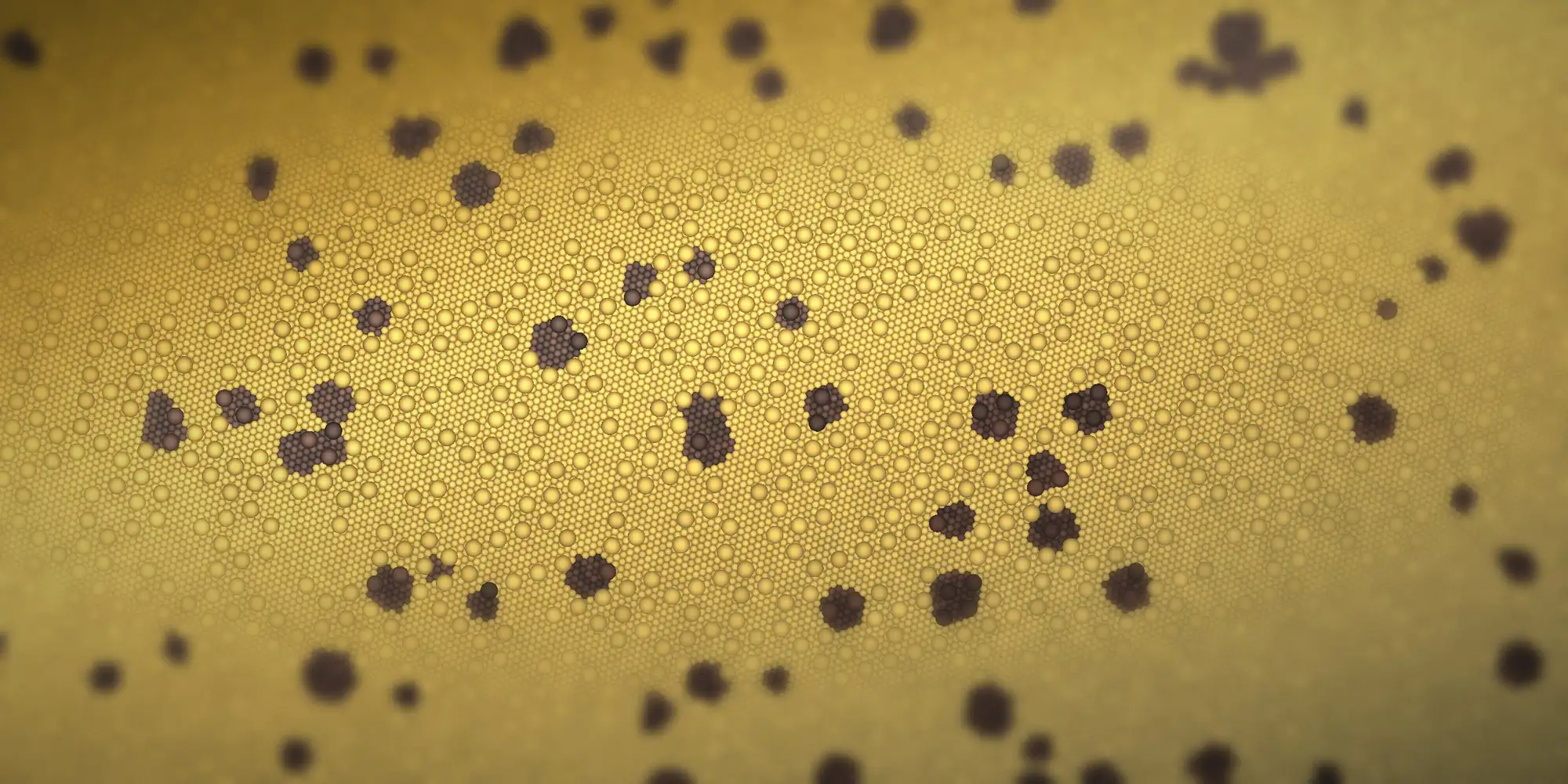
Leopard gecko
Eublepharis macularius
The leopard gecko lives in steppes and semi-deserts from Afghanistan to northwestern India. It is active in the evening, eats insects and stores fat in its tail. It needs a warm floor, a humid hide, calcium in its food and a brumation period.
Contents 11 sections
Quick tips
- Never grab the tail: Leopard geckos can drop it. It grows back, but shorter and thicker.
- Heat comes from below and above: The warm spot on the floor matters for digestion. At night the enclosure may cool down.
- Don't forget calcium: Dust the insects. Without calcium and UV, the gecko risks soft bones.
- Keep males on their own. One male with several females, or a group of females, can work. One male with only one female is not recommended.
- Weigh weekly and keep new animals separate for a few weeks before putting them together.
Profile
- Length
- 20–25 cm including the tail, snout-vent about 10–13 cm
- Weight
- adults about 50–80 g, large lines more
- Life span
- 15–20 years, some individuals over 30 years
- Activity
- active at dusk and at night, lives on the ground
Climate and light
- Day
- 26–30 °C (79–86 °F)
- Night
- 20–22 °C (68–72 °F)
- Basking spot
- 32–35 °C (90–95 °F)
- Humidity
- 40–60%
- Light
- 10–14 hours of light that includes UVB. Austria requires daily UV exposure.
A warm spot on the floor (for example a stone slab under the lamp) and a cooler corner to retreat to. A humid hide with slightly damp substrate helps with shedding.
Enclosure
For one or two adults, at least 100 × 60 × 60 cm (L × W × H), better 120 × 60 × 60 cm. In Switzerland the floor area must be almost square: at least 72 × 72 cm for a snout-vent length of 12 cm. Floor space matters more than height, but leopard geckos still like to climb.
- Substrate
- Clay-rich sand or a sand-clay mix that firms up and can be dug into. No loose calcium sand or quartz sand, because the geckos swallow it while hunting.
- Setup
- At least as many hides as animals, one of them humid, rock structures for climbing, a shallow water bowl, a UV lamp behind a guard, a thermometer and a hygrometer.
Minimum sizes
GermanyGuideline
Length 4 × snout-vent length, width 3 ×, height 2 ×, for a pair. About 15% more floor area for each additional animal.
Source [1]
AustriaLaw
1–2 animals up to 10 cm: 0.1 m² floor area, 0.3 m high · 10–15 cm: 0.3 m², 0.4 m · adults: 0.5 m², 0.4 m. Add 0.1 m² (adults: 0.2 m²) for each additional animal.
Source [4]
SwitzerlandLaw
For up to two animals: floor area 6 × 6 snout-vent lengths, height 2 snout-vent lengths (largest animal). Add 2 × 2 snout-vent lengths for each additional animal.
Source [6]
Feeding
Juvenileup to 6 monthsdaily
House crickets, Field crickets, Roaches · no larger than the space between the eyes
Subadult6–12 monthsevery 1–2 days
Field crickets, House crickets, Roaches, Locusts · no larger than the space between the eyes
Adultfrom about 1 yearevery 2–3 days
Field crickets, House crickets, Roaches, Locusts · no larger than the space between the eyes
- Prey size
- no bigger than the space between the eyes
Feeder insects are no wider than the space between the eyes.
Source [7]
Always dust feeder insects with a mineral and vitamin supplement. Feed larvae such as mealworms or superworms only rarely. Leipzig University recommends feeding daily, except for one or two fasting days a week. Watch the weight of adults: the tail should be plump, but not thicker than the body.
Shedding
Juveniles every 2–4 weeks, adults about once a month. Leopard geckos usually eat their shed skin. Check the toes and tail tip afterward, because leftover skin can constrict them.
Source [3]
Brumation
Once a year, keep the gecko cooler for about 6–8 weeks at 15–18 °C (59–64 °F). Austria gives about 2 months at 15–18 °C (59–64 °F); published figures span 10–20 °C (50–68 °F). Have a vet check the gecko first, stop feeding 1–2 weeks before, and lower light and heat over several weeks, then raise them again the same way. Always offer water.
Breeding
- Sexual maturity
- females from about 1 year and at least 45–50 g, better a little later
- Clutch
- 2 eggs, 4–8 clutches per season, 2–4 weeks apart
- Incubation
- 45–60 days at 27–32 °C (81–90 °F)
Sex depends on incubation temperature: around 27 °C (81 °F) mostly females hatch, around 31–32 °C (88–90 °F) more males. Don't keep males together, because they fight.
Protection status and registration
As of October 20, 2026
EU
Not protected under wildlife trade law (neither CITES nor the EU Wildlife Trade Regulation).
Source [9]
Germany
No duty to register and no proof of origin required under species protection law.
Source [10]
Austria
Report to the authorities within two weeks that you keep reptiles. Since July 1, 2026, you need to take a training course (at least 4 × 60 minutes) before your first reptile. A UV lamp, a thermometer and a hygrometer are required.
Switzerland
No permit needed. The minimum sizes in the Animal Protection Ordinance are binding.
Source [6]
This is not legal advice. Rules change, so check with the responsible authority if in doubt.
Health
No substitute for a vet. If your animal seems sick, refuses food for an unusually long time or loses weight, see a vet with experience in reptiles.
Calcium deficiency (metabolic bone disease)
Signs soft or crooked jaw, bent legs, tremors, limping, poor growth
What to do Dust the insects, provide UVB and see a vet.
Stuck shed on toes and tail
Signs pale rings of skin on the toes or tail tip
What to do Provide a humid hide and gently remove the remnants after a lukewarm soak. If there is swelling, see a vet.
Constipation
Signs no poop for days, swollen belly, not eating
What to do Check substrate and temperature and see a vet.
Cryptosporidiosis
Signs weight loss, thin tail, diarrhea, regurgitation
What to do See a vet (fecal test) and keep the affected gecko strictly separate. It is contagious.
Egg binding
Signs the female doesn't lay, seems restless or weak, eggs clearly visible
What to do Offer a humid laying box. If she still doesn't lay, see a vet.
Source [3]
Sources
- Gutachten über Mindestanforderungen an die Haltung von Reptilienofficial
- The Reptile Database: Eublepharis macularius
- Der Leopardgecko – Fakten und Empfehlungen für eine tiergerechte Haltung
- 2. Tierhaltungsverordnung, § 5, § 8 und Anlage 3 (Mindestanforderungen an die Haltung von Reptilien)official
- Reptilien – passende Gehege und die richtige Einrichtung
- Tierschutzverordnung (TSchV, SR 455.1), Art. 89 und Anhang 2 (Vorbemerkungen, Tabelle 5 Reptilien)official
- Leopard Gecko Care Guide
- Winterpause für kleine Drachen – Echsen brauchen Winterruhe (Presseinformation 27/2014)
- Verordnung (EU) 2026/1383 zur Änderung der Anhänge der Verordnung (EG) Nr. 338/97 (CITES-Vertragsstaatenkonferenz 2025)official
- Bundesartenschutzverordnung (BArtSchV), § 7, §§ 12–13 und Anlagen 5 und 6official
- Tierschutzgesetz (TSchG), § 13 und § 25official
Values without a source are common experience from keeping and breeding. Every animal is different, so watch yours and adjust its care. As of October 20, 2026.
More species.
All species
Ball python
Python regiusThe ball python from West and Central Africa is the most commonly kept python or boa: small, calm and bred in many color morphs.Day26–32 °C79–90 °FHumidity60–80%
Corn snake
Pantherophis guttatusThe corn snake from the southeastern United States is probably the most commonly kept snake: adaptable, curious and bred in countless color morphs.Day24–28 °C75–82 °FHumidity50–70%
Common kingsnake
Lampropeltis getulaCommon kingsnakes come from North America, belong to the genus Lampropeltis and are considered hardy snakes for beginners.Day24–28 °C75–82 °FHumidity50–80%
Carpet python
Morelia spilotaCarpet pythons come in many forms, from the jungle carpet at 1.5–2 meters to the coastal carpet python at up to 3 meters.Day25–30 °C77–86 °FHumidity40–60%